The Parts No One Sees
September 2, 2026 · 4 min read
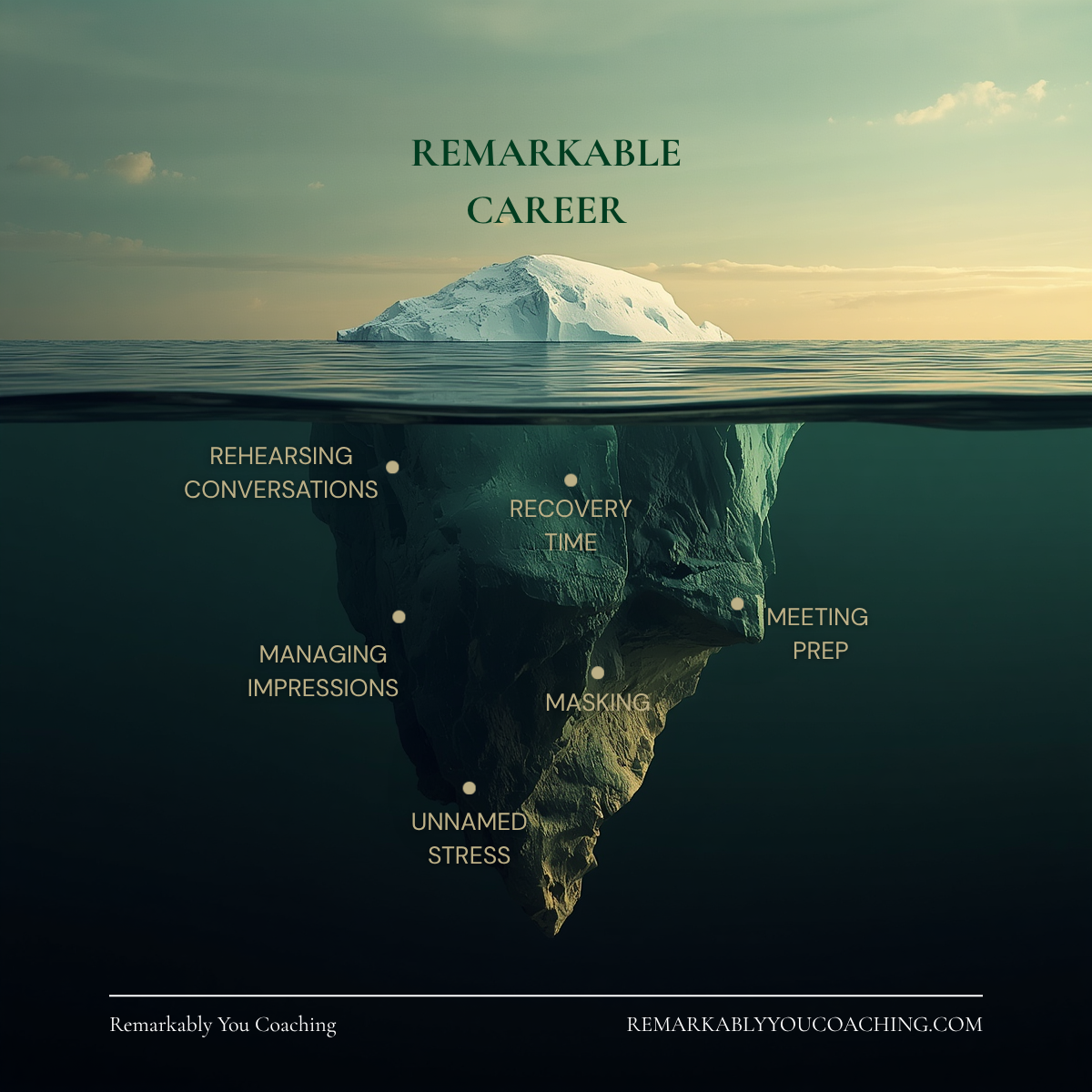
You have built a remarkable career. But what did it really cost?
People see the promotions, the accomplishments, and the reputation you have earned. They see someone who gets things done.
What they don't see is what it took to get there.
Not the long hours. Everyone knows about those. I'm talking about the quieter cost — the energy spent studying the room before you speak. The preparation before every meeting, not because you weren't capable, but because you wanted to make sure you came across the "right" way. The constant calculation of how much of yourself to reveal and how much to keep hidden.
And at the end of the day, the exhaustion that comes from performing a version of yourself instead of simply being yourself.
Many high-performing leaders carry this weight. Some have spent years believing they were the only one.
The Hidden Work of High Performance
There is a kind of labor that never appears on a performance review. It doesn't show up in a 360-degree assessment or a leadership competency model. But it shapes how you show up every single day.
It is the work of translation — converting who you naturally are into a version that fits the expectations of the environment around you. For some leaders, this happens consciously. For many, it has become so automatic that they barely notice it anymore.
What I have learned, both from my own 35-year career across five Fortune 200 organizations and from the leaders I now coach, is this: the most exhausting thing a high-performing leader can do is spend their career trying to look like a leader instead of actually being one.
When Strength Becomes a Burden
The leaders who carry this weight the heaviest are often the most capable people in the room. They are thorough, perceptive, and deeply conscientious. They care about doing things well. They are rarely satisfied with good enough when excellent is possible.
But those same qualities — the attention to detail, the tendency to think several steps ahead, the deep awareness of how they are being perceived — can become a relentless internal workload when there is no space to simply be themselves.
I've sat across from executives who were widely regarded as calm, decisive, and unflappable — and heard them describe coming home too depleted to have a conversation with their family. Not because the work itself was too hard. Because so much of their energy had gone into managing the performance of leadership rather than the practice of it.
A Different Definition of Leadership
I've come to believe that the strongest leaders aren't the ones who never struggle. They're the ones who eventually stop measuring themselves by how well they fit someone else's definition of leadership.
Real leadership begins when you no longer spend your energy trying to look like everyone else in the room.
That is what this series is about. Over the next twelve reflections, we'll explore the parts of leadership that rarely get named — the quiet costs, the hidden strengths, the beliefs that shape how we show up, and what becomes possible when we stop performing leadership and start living it.
There are more of us than we realize. And the conversation begins here.
Reflection: What is the quiet cost you've been carrying that no one else can see? When did you last lead as yourself — not as the version of a leader you thought you were supposed to be?
Continue the conversation
If this resonates with you, I’d love to hear your story. The conversations that change us usually begin with someone finally feeling understood.
Book a Free Discovery Call →